
Fence Line Clearing

Professional Fence Line Clearing for Straight, Buildable Property Boundaries

Before a new fence can be built or an old one replaced, the line has to be cleared right — for accuracy, for equipment access, and for the health of the land on both sides. Graham Land Services provides dependable fence line clearing for rural, agricultural, and residential properties throughout East and South Texas.

We open up overgrown boundaries choked with brush, saplings, briars, small trees, and years of accumulated growth. We don’t just cut a path — we clear a clean, workable corridor along your property line, leaving it ready for new fence installation, cross-fencing, or improved access.

Request An Estimate

Types of Fence Line Clearing We Handle

We offer a complete range of fence line clearing services built for rural and residential properties where terrain, access, and neighboring land all have to be managed carefully:

  • New fence line clearing — Opening a clean corridor where no fence exists yet
  • Overgrown fence line reclamation — Removing brush and growth swallowing an existing fence
  • Cross-fencing and pasture division — Clearing interior lines for rotational grazing and paddocks
  • Brush, briar, and sapling removal — Cutting back the dense growth that crowds boundaries
  • Tree line and treeline edge clearing — Managing small trees and limbs along the line
  • Old fence removal and line prep — Pulling old wire and posts and readying the corridor

Every fence line is different. We match the right equipment and method to the density of growth, terrain, and access to deliver a clean, controlled result.

What’s Included in Our Fence Line Clearing

Professional fence line clearing is about far more than mowing a strip of brush. Our process is built to leave the boundary genuinely ready for whatever comes next.

We handle cutting and removing brush, briars, and saplings; grinding or hauling of larger material; managing small trees and limbs along the line; clearing a corridor wide enough for fence crews and equipment; and coordinating with follow-up work such as grading or additional clearing. By handling the clearing and any related site work together, we save you the hassle of juggling multiple contractors and cut delays between phases.

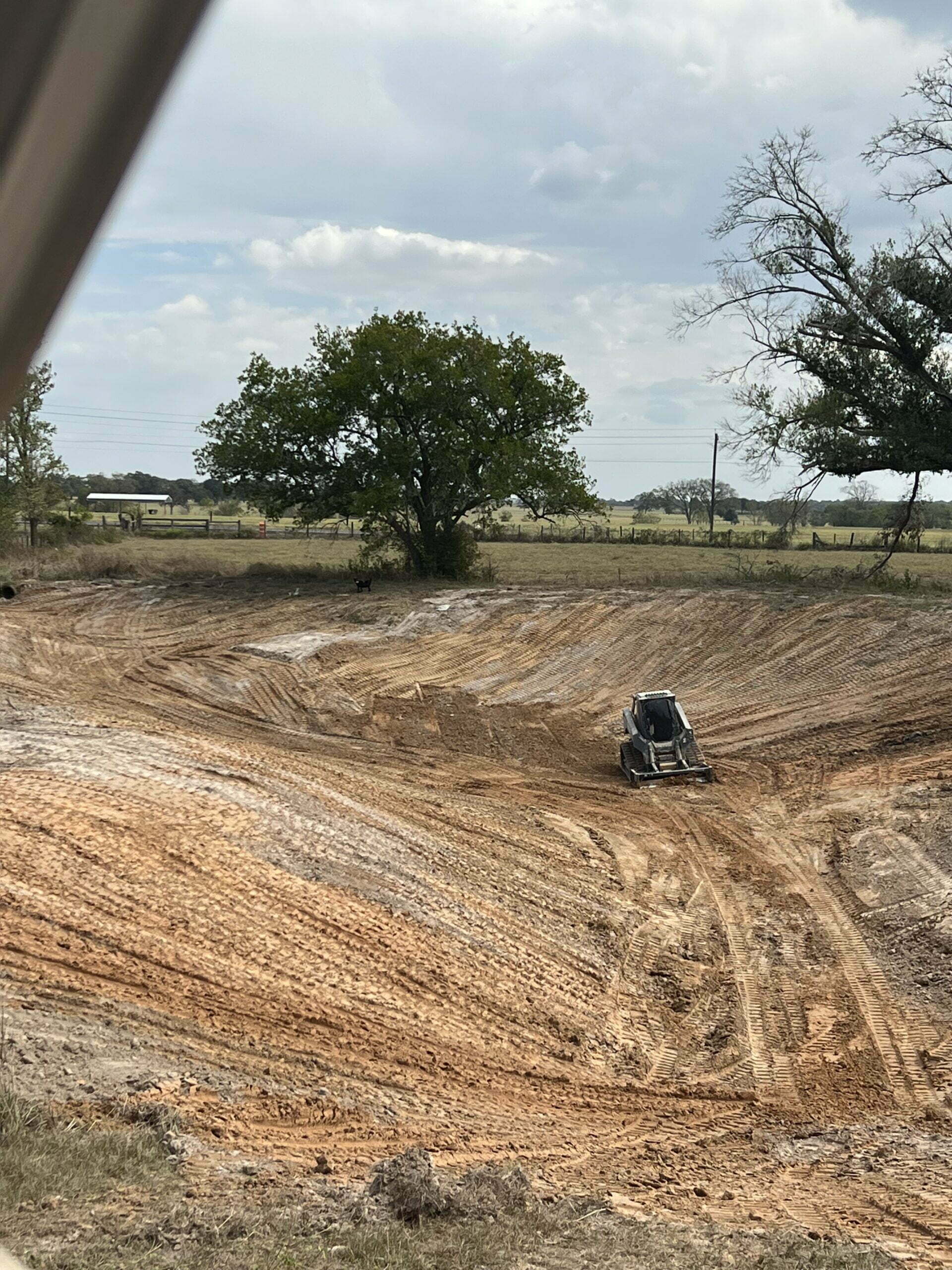
Site clearing and grading for pond construction in Anderson, TX

Our Fence Line Clearing Process

Every fence line clearing job starts with a plan. Good planning is what keeps the work efficient, on schedule, and aligned with your property line — and it makes sure the finished corridor supports your next step.

We begin with an on-site walk-through to evaluate the line and surrounding property, identify buried utilities, access routes, and potential hazards, determine the most efficient clearing method for the growth present, plan how brush and debris will be removed, and understand your goals for the boundary.

Utility locating is a required part of our process before any clearing begins. We don’t guess about what runs along or under a fence line — we confirm it. That step protects your property and your neighbor’s, and it keeps the work sequenced correctly from the start.

Once work begins, we use the right equipment for controlled clearing, work methodically to protect healthy trees and land beyond the corridor, remove brush and debris efficiently to keep the line clean, maintain safe working conditions throughout, and leave the boundary ready for fencing.

Fence Line Clearing for Rural and Residential Properties

Clearing fence lines on rural land is a different job than trimming a suburban lot. Larger acreage, tight access, uneven terrain, and decades of overgrowth all call for an experienced, adaptable approach. Many of the lines we open — old perimeter fences, wooded property boundaries, interior pasture divisions — bring access and sequencing challenges that only come with regularly doing this kind of work.

Our fence line clearing is a strong fit for ranch and rural acreage, new fence installation before construction, agricultural land needing cross-fencing, properties being prepared for sale or grazing, and remote boundaries with limited equipment access.

Fence Line Clearing and Site Preparation Go Hand in Hand

One of the biggest advantages of working with Graham Land Services is the ability to move smoothly from fence line clearing into broader land preparation.

Once the line is opened up, we can continue with:

  • Land clearing and grubbing
  • Underbrushing or forestry mulching
  • Pasture cleanup and reclamation
  • Driveways and access roads
  • Grading and drainage improvements

This integrated approach saves time, lowers costs, and keeps your project moving forward without delays or coordination headaches between multiple contractors.

Safety and Environmental Considerations

Safety is central to every fence line clearing job. We work to open the corridor in a controlled way while limiting risk to people, equipment, and the land on both sides of the line.

Our approach includes:

  • Locating and avoiding buried utilities and hazards
  • Using the proper equipment for the growth present
  • Controlling brush and debris during clearing
  • Maintaining safe access along the line
  • Cleaning the corridor thoroughly when finished

We also weigh environmental factors, including soil disturbance, debris handling, and protecting healthy trees and neighboring land from needless impact.

Benefits of Professional Fence Line Clearing

Bringing in an experienced contractor to clear your fence line offers clear advantages:

  • A clean, straight, workable boundary corridor
  • Efficient brush and debris handling and cleanup
  • Proper preparation for new fence installation
  • Reduced risk of damage to surrounding land
  • Faster project timelines with fewer delays

Professional fence line clearing gets the job done right the first time, saving you from costly rework down the road.

Fence Line Clearing — Frequently Asked Questions

What is fence line clearing?

Fence line clearing is the process of removing brush, trees, vines, and overgrown vegetation along the edges of a property or fence line. Over time — especially in East Texas — cedar, yaupon, greenbrier, and native brush can overtake fence lines completely, making them impossible to inspect, maintain, or re-stretch without clearing the vegetation first. Fence line clearing restores access, visibility, and functionality to your perimeter.

It depends on your goals and the equipment being used. A typical fence line clearing pass runs 10 to 20 feet on either side of the fence, which gives you enough room to inspect and work on the fence, run equipment alongside it for future maintenance, and keep regrowth from immediately closing back in. If you need a wider clear — for a firebreak, a ranch road alongside the fence, or improved visibility — we scope accordingly during the walk-through.

We clear whatever side or sides you need. On a property boundary fence, you may only have legal access to your side. On an interior fence dividing pastures, we typically clear both sides in one pass. We discuss this during the site visit so the scope matches your access and your goals.

It depends on what’s growing and how dense it is. Forestry mulching is often the best option for fence line clearing because it processes vegetation in a single pass without creating debris piles, lays down a mulch layer that suppresses regrowth, and causes minimal ground disturbance near the fence itself. For heavier timber or situations where the cleared material needs to be fully removed, mechanical clearing and grubbing is the right approach. We recommend the best method for your specific fence line after seeing it.

Yes — protecting the existing fence is a standard part of how we approach fence line clearing. We work carefully around posts, stays, and wire, and we select attachments and equipment that give us the control to work close without causing damage. If the fence is already in poor condition before we start, we flag it so you’re aware going in.

This is very common on older fence lines, and it’s one of the more challenging parts of the job. Trees that have grown into the fence wire require careful removal to avoid pulling posts or damaging wire in the process. We assess each situation on the fence line and handle tree-in-fence situations methodically rather than just running equipment through.

It will try to — that’s the nature of East Texas brush. Forestry mulching gives you the best natural regrowth suppression because the mulch layer shades the ground and reduces germination of new brush seed. Grubbing root systems on larger cedar and yaupon reduces regrowth from established root masses. Most landowners in this area plan on a maintenance clearing every one to three years depending on how aggressively the brush returns on their property.

Need Fence Line Clearing for Your Property?

If you have a boundary that needs opening up, Graham Land Services provides safe, efficient fence line clearing with complete brush cleanup and prep for new fencing. We start with a site walk-through to evaluate your line and give you a clear, itemized plan. Call (936) 203-6910 or reach out online to schedule your free assessment.