
Pond & Lake Construction in East & South Texas
From cattle tanks to fishing lakes, Graham Land Services provides professional pond and lake construction services across East and South Texas. Our team builds durable ponds designed to hold water, manage rainfall, and withstand Texas summers.
Since 2010, we’ve completed pond excavation, stock tank construction, and lake builds for ranches, rural properties, and large residential tracts. Every project combines soil evaluation, proper clay compaction, and drainage-smart design to ensure long-term performance and water retention.
Whether you need a new pond built, an existing pond repaired, or a lake expanded, we approach every project with the same goal: build a pond that fills reliably, holds water, and improves the usability of your property.
Request An Estimate
New Ponds, Rebuilds, and Pond Leak Repairs
Whether you’re starting from scratch, rebuilding an older pond, or addressing a pond that won’t hold water, our team can help. We evaluate your soil conditions, watershed size, drainage patterns, and elevations to design a pond that performs reliably.
Our pond building services include:
- New pond construction for ranches and rural properties
- Stock tank construction for livestock
- Fishing pond and recreational lake construction
- Pond excavation and deepening
- Dam repair and pond leak fixes
The goal of every project is simple: a pond that fills consistently, protects the dam structure, and matches how you plan to use the property — whether that’s livestock watering, irrigation, fishing, or a scenic water feature.
Our Step-by-Step Pond Building Process
Successful pond construction requires more than digging a hole in the ground. A well-built pond must be carefully planned, excavated, sealed, and protected from erosion and water loss. Our process focuses on the factors that determine whether a pond holds water for decades or fails within a few seasons.
Every pond construction project begins with an on-site visit. During this visit we evaluate the property, determine the best pond location, and discuss how the pond will be used.
We review:
Desired pond size and shape
Target depth for livestock, fishing, or irrigation
Access routes for excavation equipment
Nearby utilities and fence lines
Trees or features that should be preserved
Planning the pond excavation process early allows us to build efficiently while protecting surrounding areas of the property.
A successful pond depends heavily on the watershed feeding it. We evaluate the surrounding terrain and natural drainage patterns to determine the best location for your pond construction project.
By placing the pond where runoff naturally collects, we improve the pond’s ability to fill during rainfall while protecting surrounding areas from erosion or unwanted water flow.
One of the most important steps in pond building is understanding the soil profile. We evaluate the clay content and compaction potential of the native soil to determine whether it will properly seal the pond basin.
If native soil conditions are marginal, we design a solution that may include:
Additional clay installation
Soil conditioning
Engineered liner approaches
These steps help ensure the finished pond holds water long term.
During the pond excavation phase, we remove topsoil and excavate down to suitable clay material. This clay is essential for building a pond basin that retains water.
The excavated material is then used to build a pond dam designed for durability and safety.
Typical dam features include:
2:1 slopes for safe maintenance and mowing
10–12 foot wide dam crests for vehicle access
Removal of trees or roots that could create leaks
Proper dam construction is critical to the success of any pond or lake construction project.
A keyway is one of the most important structural components in pond construction. This trench is cut along the base of the dam and filled with compacted clay to prevent water from leaking beneath the dam structure.
For larger ponds and lakes, a properly installed keyway provides critical protection against seepage and dam failure.
After excavation and shaping, a clay liner is installed and compacted in controlled lifts. Proper compaction ensures the pond basin seals correctly and holds water.
Our process uses:
Controlled lift thickness
Proper soil moisture levels
Compaction equipment designed for pond building
These steps are essential for preventing leaks and ensuring long-term pond performance.
Every pond construction project includes a carefully designed overflow system to manage heavy rainfall.
Depending on pond size, this may include:
Concrete spillways
Culvert pipe outlets
Graded overflow channels
Proper overflow design protects the pond dam and prevents erosion during large storm events.
We blend banks, shape access, respread saved topsoil where useful, and seed or hydromulch disturbed areas to control erosion as the pond fills. On request, we can add fish habitat (brush piles, upturned stumps, ledges) and recommend a practical maintenance plan for banks and vegetation.
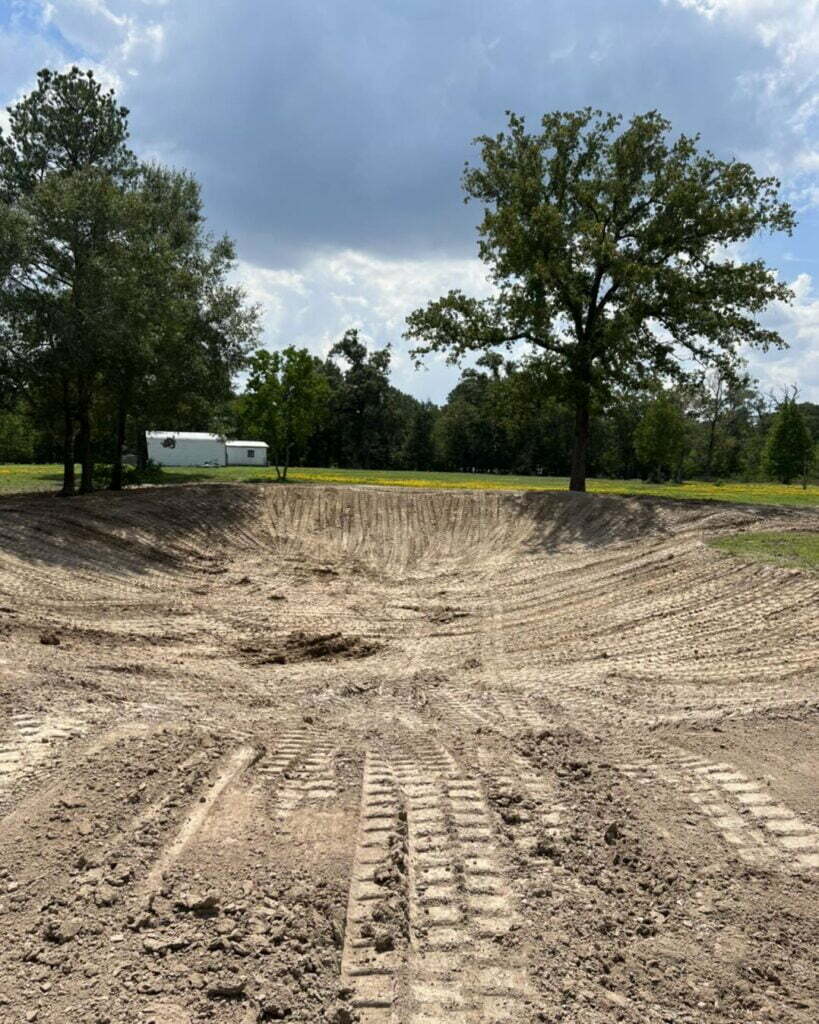
We build our dams at a 2-1 slope so they can be safely maintained and mowed on a tractor. Additionally, we usually have a 10-12 ft wide flat spot across the top of the dam for vehicle access to a road to make sure every area of your land is still easily accessible.
Another challenge to consider when building a dam is how the surrounding trees will affect the dam. Trees and brush on a dam are not good for the pond. The root system goes through the dam and can cause the dam to leak. Another problem is that the trees take a lot of water from your pond themselves. This can make it difficult for your pond to retain water.
Once the dam is formed and all the topsoil is removed we install a keyway along the base of the dam. A keyway is basically a large trench usually 2-3 feet deep along the base of the dam that is filled and compacted with clay. The keyway keeps water from leaking underneath the dam. These are especially important on larger lakes where we excavate the lake to a very deep level.
How Deep Should Your Pond Be?
Depth depends on overall pond size, width, and intended use. As a general guide:
- ¼–½ acre ponds typically finish 8–12 feet deep
- ~1 acre ponds may run 12–20 feet
For fishing ponds specifically:
- Bass, crappie, and perch need a minimum of 8–10 feet in key zones
- Catfish typically perform well in 10–14 feet of water
In Texas climates, deeper zones also reduce evaporation loss during hot summers — an important factor for smaller stock ponds that may not have large watershed areas feeding them.
We can place fish habitat — upturned stumps, brush piles, and structure — during construction to improve fishing quality and protect bait fish populations from the start.
Pond Leak Repairs
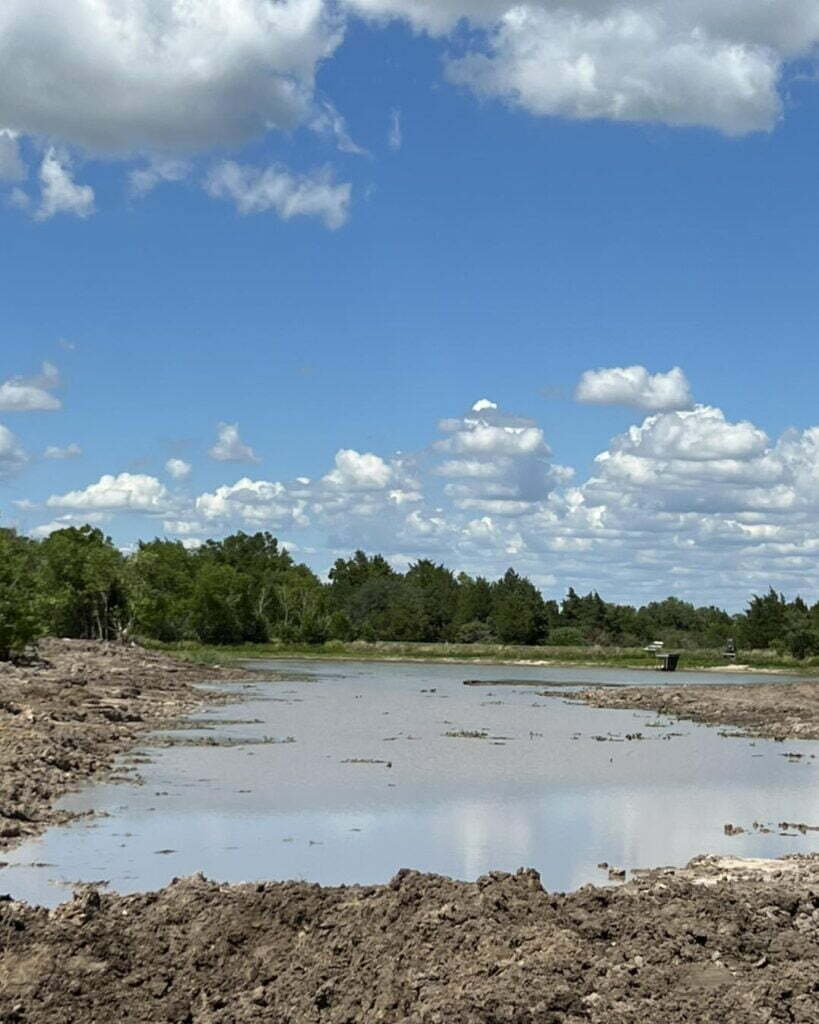
If a pond won’t hold water or drops fast during dry spells, the cause is almost always one of a few things: poor compaction during original construction, insufficient clay content, tree roots penetrating the dam, or uncontrolled seepage under the embankment. We investigate the likely cause, then implement the right fix — which may include re-compaction and clay lifts, a new keyway install, liner amendments, bank reshaping, or resetting the overflow structure. We don’t guess at pond leak repairs; we diagnose first.
Frequently Asked Questions
How do I know if my property can support a pond?
The two biggest factors are soil and watershed. The soil needs enough clay content to hold water when properly compacted — sandy or loamy soils without adequate clay will leak regardless of how well the basin is shaped. The watershed is the area of land that drains toward the pond site; too small a watershed and the pond won’t fill reliably, too large and the overflow design becomes critical. We evaluate both during the on-site walk-through before recommending a location or scope. If your property can support a pond, we’ll tell you. If it can’t, we’ll tell you that too.
What is a keyway and why does it matter?
A keyway is a trench cut along the base of the dam — typically 2 to 3 feet deep — that’s filled and compacted with clay. Its job is to prevent water from seeping underneath the dam structure, which is one of the most common causes of pond failure and dam erosion. On larger lakes where the pond depth and water volume are significant, a properly installed keyway is especially critical. We install keyways on every dam we build.
Why do trees on a dam cause problems?
Tree and brush root systems penetrate dam material over time, creating channels and pathways that allow water to seep through the dam rather than being retained. Roots also pull significant amounts of water directly from the pond, reducing retention capacity. We remove all trees and brush from the dam footprint before forming and compacting, which is a step some contractors skip — and one that causes problems years down the road.
How deep should my pond be?
It depends on size and intended use. For ponds in the quarter- to half-acre range, 8 to 12 feet of depth is typical. Ponds around one acre may run 12 to 20 feet. For fishing ponds, bass, crappie, and perch need a minimum of 8 to 10 feet in key zones; catfish are comfortable at 10 to 14 feet. Deeper water also reduces evaporation loss during Texas summers, which matters especially for smaller stock ponds with limited watershed. We size depth to your specific pond area, use, and drainage volume.
How long does it take to build a pond?
Most stock ponds and smaller fishing lakes take one to two weeks of active construction time, depending on size, access, and soil conditions. Larger multi-acre lakes take longer. Weather and site conditions also affect scheduling. We give you a realistic timeline in the estimate and communicate clearly if conditions change.
What's the difference between a stock tank and a fishing pond — do they get built differently?
The construction process is largely the same — soil testing, excavation, dam and keyway, clay liner compaction, spillway. The differences are in sizing, depth targets, and finishing. A stock tank is sized primarily for reliable water volume for livestock and is typically shallower and simpler. A fishing pond is designed with depth zones for different species, fish habitat placed during construction, and bank finishing that supports long-term fishing use. We scope the build around your intended use from the start.
Can you add fish habitat during pond construction?
Yes, and construction is actually the best time to do it. We can place upturned stumps, brush piles, and ledge structure in strategic locations before the pond fills, which creates cover and feeding zones that dramatically improve fishing quality from the start. Once the pond is full, adding habitat is much harder. If fishing is a goal, tell us during the planning conversation and we’ll incorporate it into the build.
Build on Solid Water—Let’s Plan Your Pond
Tell us your goals — livestock water, fishing, irrigation, or a scenic lake — and we’ll map a clear, cost-smart plan covering site selection, soils, dam and keyway, liner compaction, and spillways. Expect a clean, itemized estimate and a realistic timeline. Call (936) 203-6910 to schedule an on-site visit and free estimate.