Right-of-way clearing

Professional Right-of-Way Clearing for Clear, Accessible Corridors

When a corridor needs to be opened for utilities, fence lines, roads, or pipelines, the work has to be planned with care — for safety, for the surrounding land, and for whatever’s coming next. Graham Land Services delivers dependable right-of-way clearing for residential, agricultural, and rural properties throughout East and South Texas.

We manage the full corridor: removing trees, brush, stumps, and debris along utility lines, easements, fence rows, access roads, and pipeline routes. We don’t simply cut things down — we perform controlled clearing that leaves a defined, stable corridor ready for the next phase, whether that’s utility installation, fencing, road building, or grading.

Request An Estimate

Types of Right-of-Way Clearing We Provide

We provide a complete range of right-of-way clearing services built for rural and residential properties where terrain, surrounding vegetation, and access all have to be carefully managed:

  • Utility line clearing — Opening corridors for power, water, and communication lines
  • Boundary corridor clearing — Clearing brush and trees along easements and rights-of-way
  • Pipeline and easement clearing — Establishing defined routes and easements across acreage
  • Access road and driveway corridors — Clearing paths for new roads and driveways
  • Corridor brush removal — Clearing undergrowth and vegetation along the right-of-way
  • Selective clearing — Removing hazardous or overgrown vegetation while preserving healthy trees

Every corridor calls for a different plan. We match the right equipment and method to the vegetation, width requirements, and site conditions to deliver efficient, controlled results.

What's Included in Our Right-of-Way Clearing

Professional right-of-way clearing is far more than cutting a path. Our process is built to fully prepare the corridor for whatever comes next.

We handle vegetation removal using controlled methods; debris separation and hauling, including wood, brush, and stumps; corridor cleanup along the route; site cleanup and rough grading preparation; and coordination with follow-up work such as fencing, utility installation, or road construction. By managing both the clearing and the site work, we remove the need for multiple contractors and cut delays between phases.

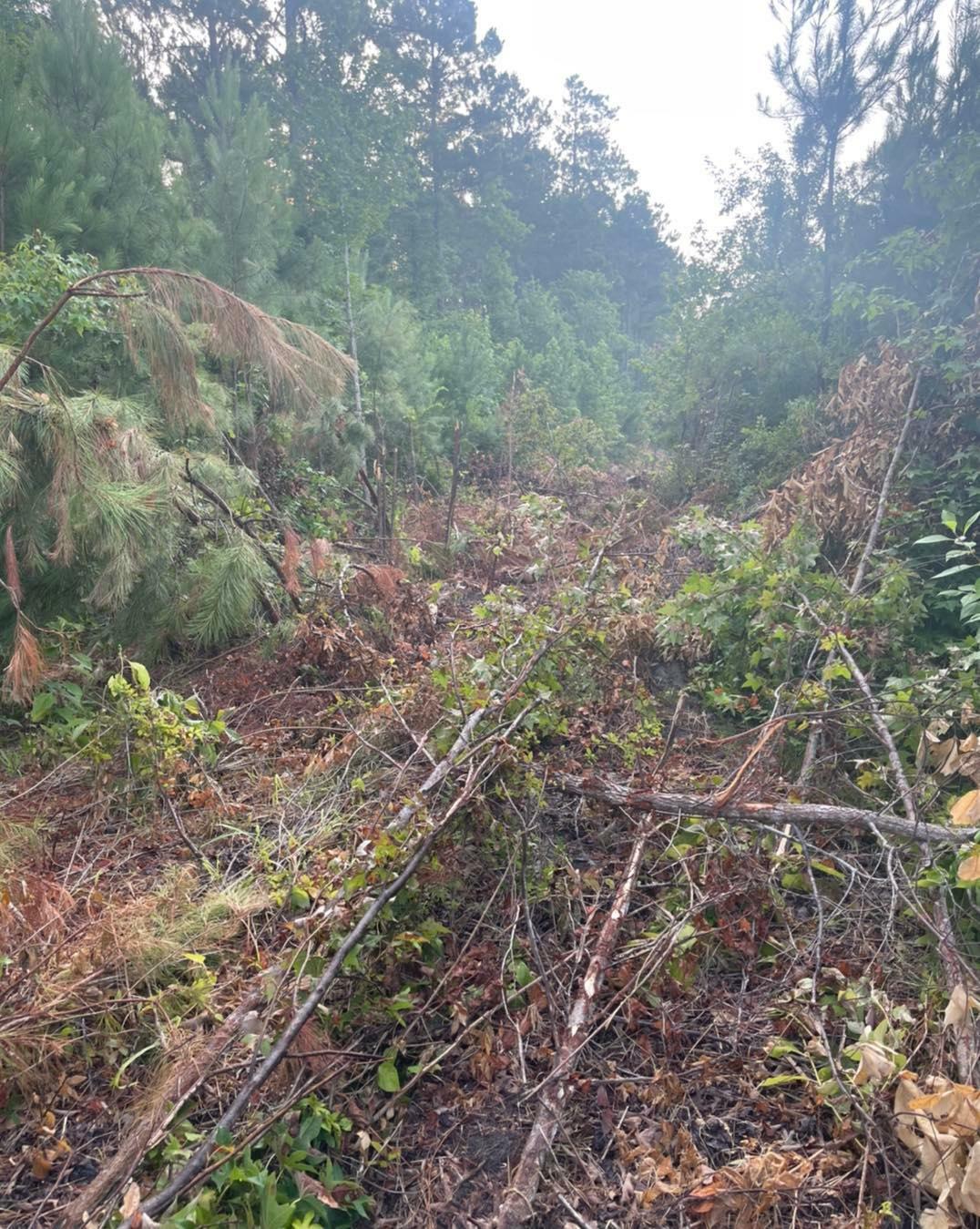
Tree removal in progress with cut branches and brush cleared along a wooded corridor

Our Right-of-Way Clearing Process

Every clearing project starts with a plan. Solid planning is what keeps the work safe, efficient, and on schedule — and ensures the finished corridor supports your next step.

We begin with an on-site walk-through to assess the corridor and surrounding land, identify utilities, access points, and potential hazards, determine the safest and most efficient clearing method, plan debris removal and cleanup, and understand your long-term goals for the route.

Utility locating is a required part of our process before any clearing begins. We don’t guess what’s in the ground — we confirm it. That step protects both the corridor and the surrounding property, and it keeps the work sequenced correctly from day one.

Once work begins, we use the appropriate equipment for controlled clearing, work systematically to minimize unnecessary impact on adjacent areas, remove debris efficiently to keep the corridor organized, maintain safe working conditions throughout, and prepare the right-of-way for the next phase of use.

Right-of-Way Clearing for Rural and Residential Properties

Clearing corridors on rural land is different from urban or commercial settings. Larger properties, limited access, and changing terrain demand a more experienced and adaptable approach. Many of the routes we open — long fence lines, overgrown easements, pipeline paths crossing acreage — bring access and sequencing challenges that call for the kind of judgment that only comes from doing this work regularly.

Our right-of-way clearing services fit rural acreage and ranch properties, homesites being prepared for new utilities, agricultural land needing new fence rows or access, properties being readied for sale or development, and remote locations with limited equipment access.

Right-of-Way Clearing and Site Preparation Go Hand in Hand

One of the biggest advantages of working with Graham Land Services is the ability to move seamlessly from right-of-way clearing into full site preparation.

After clearing the corridor, we can continue with:

  • Land clearing and grubbing
  • Underbrushing or forestry mulching
  • House pad construction
  • Driveways and access roads
  • Grading and drainage improvements

This integrated approach saves time, lowers costs, and keeps your project moving forward without delays or coordination headaches between multiple contractors.

Safety and Environmental Considerations

Safety is a critical part of every right-of-way clearing project. We take steps to ensure that vegetation and obstacles are removed in a controlled manner while minimizing risks to people, equipment, and surrounding property.

Our approach includes:

  • Identifying and avoiding utilities and hazards
  • Using proper equipment for each corridor type
  • Controlling debris during clearing
  • Maintaining safe access routes
  • Cleaning the corridor thoroughly after completion

We also weigh environmental factors, including soil disturbance, debris handling, preserving healthy non-invasive trees, and protecting surrounding land from unnecessary impact.

Benefits of Professional Right-of-Way Clearing

Hiring an experienced contractor for right-of-way clearing brings clear advantages:

  • Safe, controlled removal of vegetation and obstacles
  • Efficient debris handling and cleanup
  • Proper preparation for utilities, fencing, or roads
  • Reduced risk of damage to surrounding areas
  • Faster project timelines with fewer delays

Professional clearing gets the job done correctly the first time, heading off costly problems later.

Right-of-Way Clearing — Frequently Asked Questions

What is right of way clearing?

Right of way clearing is the removal of trees, brush, vines, and overgrown vegetation from a designated corridor — typically along roads, utility lines, pipelines, easements, or property access routes. The goal is to establish and maintain a clear, unobstructed path for safe travel, utility access, or property access while keeping the corridor from being reclaimed by natural vegetation growth.

We clear a wide range of right of way types common to rural East Texas properties, including road and driveway access corridors, private easements and shared access routes, power line and utility easements, pipeline corridors, property boundary easements, and rural county road frontage. If you have a corridor that needs to be cleared and maintained, call us and we’ll confirm it falls within our scope.

Forestry mulching is the most efficient method for right of way clearing in most situations. It processes standing vegetation in a single pass — cutting, grinding, and depositing a fine mulch layer on the ground — without creating debris piles that need to be managed separately. It is fast, soil-friendly, and precise enough to work within defined corridor boundaries without disturbing vegetation outside the right of way. For corridors with heavier timber or specific debris removal requirements, mechanical clearing is used instead.

Width depends on the purpose of the right of way. A private driveway or access easement typically needs 14 to 20 feet of clearance for single-lane vehicle travel plus side clearance for vegetation overhang. Utility easements are often cleared to their full recorded width. Pipeline corridors may have specific width requirements set by the operator. We scope the clearing width to your easement documentation and intended use, and we confirm boundary lines before clearing begins.

For property boundary easements and shared access routes, having a survey or clearly marked boundary lines before clearing begins is strongly recommended. Clearing outside a recorded easement onto adjacent property can create legal issues. For interior right of way corridors on a single property — such as a ranch road or power line easement on your own land — surveyed boundaries are less critical but knowing the easement width helps scope the work accurately.

Yes. Our operators work within defined clearing boundaries and use equipment and attachments that allow for precise operation along the corridor edge. Forestry mulching in particular gives operators tight control over where clearing stops, which protects desirable trees and vegetation immediately outside the right of way. We walk the corridor with you before clearing begins to confirm the boundaries and identify anything that should be preserved.

Need Right-of-Way Clearing for Your Property?

If you have a corridor that needs to be opened, Graham Land Services provides safe, efficient right-of-way clearing with complete cleanup and site preparation. We start with a site walk-through to evaluate your project and give you a clear, itemized plan. Call (936) 203-6910 or reach out online to schedule your free assessment.